
Type I Failure of Formation
Arthrogryposis is a rare congenital non-progressive disease that has many causes. Patients with arthrogryposis have a decreased number of anterior horn cells. The name comes from the Greek words “curving of joints”.
Arthrogryposis presents with multiple joint contractures (joint fusions), fibrosis, and hypoplastic muscles (weak muscles). It is symmetrical and can affect only 2 joints or all of the joints in the body. If only one joint is fused, then the diagnosis is not arthrogryposis, but a congenital contracture.
The primary underlying mechanism that causes congenital contractures is believed to be decreased fetal movement during development. The joints begin to develop in a fetus around 5-6 weeks into pregnancy. Motion is essential for the proper development of the fetal joints. Without motion, extra connective tissue develops around the joints creating fusions. Specific symptoms and physical findings differ greatly from one person to another. The cause is being debated, arthrogryposis occurs randomly. More than 400 different conditions can cause isolated or multiple contractures. Over 350 genes have been identified as responsible for arthrogryposis.
Time to Play the Brain Game:
Q) Almost every joint in a patient with arthrogryposis is often affected. True or False?
A) True! Every joint in the body has signs and symptoms of limited mobility.
Therapy treatment for Arthrogryposis:
Daily therapy begins at birth. Therapy includes gentle joint manipulations and stretching. Manual stretching and stretching through serial casting or a series of custom orthoses. A series of splints/orthoses are used as the child’s ROM changes.
Night splinting is widely used so that the patient can exercise during the day.
Regular muscle movement and exercises are important to improve strength. Teach the baby to roll, sit and crawl, progressing to standing and walking. Use play activities for stretching and reaching activities. Multi-joint reaching movements are recommended. Improve gross motor and fine motor skills with hand manipulation and repetitive tasks. Teach use of adaptive devices for ADLs and work on a feeding program to improve independence. Physical therapy addresses the need for a wheelchair or walking device. 1 hour minimum of therapy every day is recommended. Patient will require on-going therapy or exercises to prevent joint contractures from redeveloping.
Example of a serial elbow extension splint:

When the tissue relaxes, remold the anterior portion of the splint to improve extension.
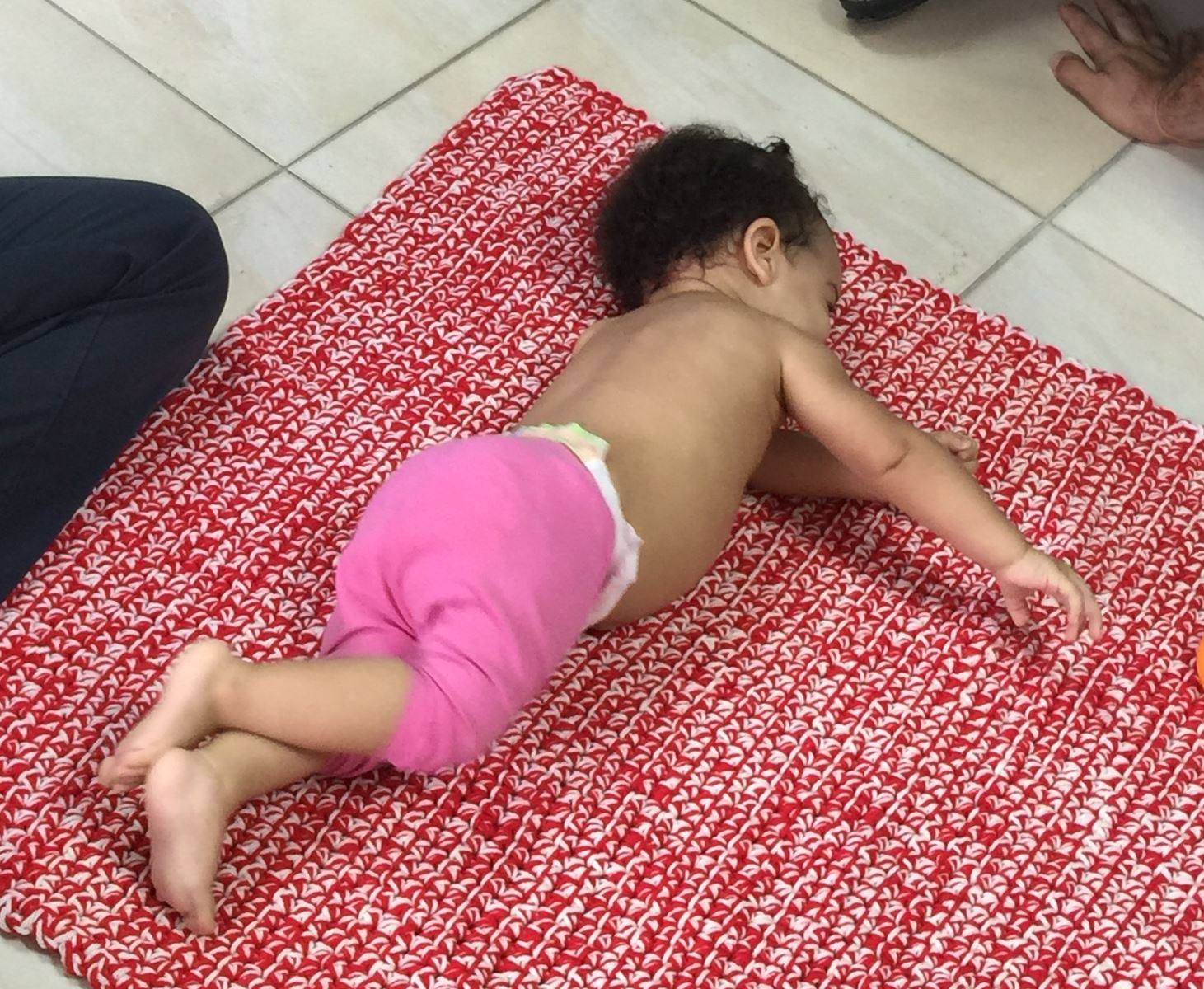
Teaching a baby to roll improves strength
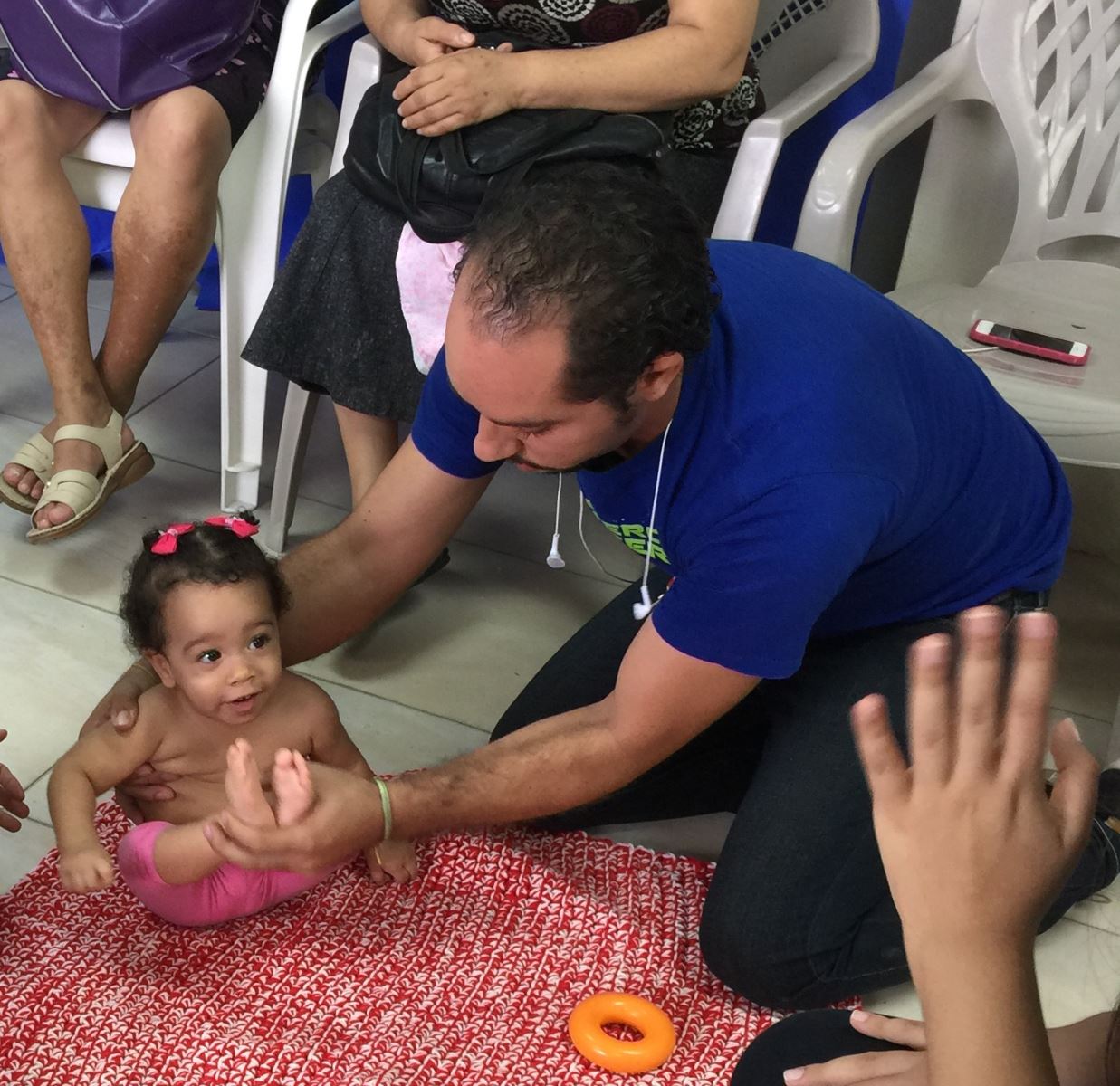
Teaching the family a daily stretching routine is vital:
Time to Play the Brain Game:
Q) Arthrogryposis is a progressive disorder. True or False?
A) False – this disorder is non-progressive and with proper medical care things can improve. Joint contractures do not get worse and have the ability to improve with therapy which will improve functional use and quality of life.
Surgical options for Arthrogryposis:
Surgical options vary vastly from case to case. Each patient is evaluated at different stages of development for the best possible options. Surgical options include: wedge osteotomies to improve extension of a fused wrist, tendon transfers to increase muscle function, joint capsule releases (capsulotomy), humeral osteotomy, and muscle lengthening procedures.
Dorsal wedge osteotomies can increase wrist extension or correct ulnar deviation. The surgeon must be careful not to extend the wrist too much and force finger flexion.